Inside Algeria’s Migration Crackdown: What Data Reveals from a ‘Black Box’ State
Algeria is one of Africa’s most security-focused states, with a defence budget of around $25 billion—and migration is firmly part of this security agenda. While countries such as Egypt, Libya, Morocco, and Tunisia have all, to varying degrees, yielded to pressure from the European Union in exchange for economic benefits tied to reducing migration, Algeria has refused to do so, firmly emphasizing its sovereignty and a commitment to African solidarity. But opacity does not mean inactivity!
Beneath the surface, Algeria has built its own dense system of migration control. What is known about this system comes largely from scattered reports by human rights organizations. These organisations report on mass expulsions of Sub-Saharan migrants amounting to more than 30 000 per year in 2023 and 2024. In cities like Algiers and Oran, migrants are routinely swept up in large-scale raids and deported to Niger—often under conditions that amount to human rights violations.
From Urban Raids to Desert Borders
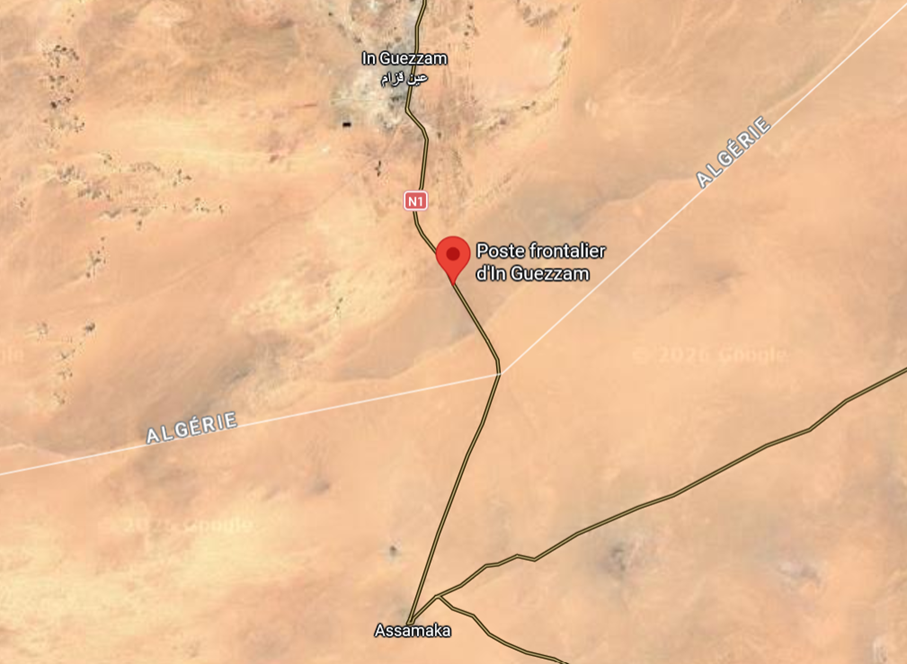
“The conditions of arrest, detention, and expulsion carried out by the Algerian government do not respect the fundamental principle of non-refoulement and constitute practices that violate international human rights law and international refugee law,” explains Jamal Mrrouch, head of mission for MSF in Niger. The figures above largely capture people inside the country. But the regime’s hardline approach is already evident at the borders—particularly at the crossing of In Guezzam. Beyond these largely hidden expulsions, migrants are arrested daily at border points and swiftly deported.
Here, numbers remain snapshots rather than a full picture. So I went looking for the traces. This Databit is based on a dataset scraped from weekly operational reports published by the Algerian Ministry of Defence. Buried in archived web pages and formatted inconsistently, these reports are one of the few official sources that regularly mention migration-related arrests. Using web scraping techniques in R, I collected more than 100 reports spanning 2023 to 2025 and complemented them with older reports hidden in archived local news articles. I extracted arrest figures, cleaned inconsistent formats, and assembled them into a single dataset.
Following the Traces in Official Data

What emerges is rare: a longitudinal view of Algeria’s enforcement practices at its borders. Arrest figures reported by the military show sustained and, in some periods, rising levels of enforcement activity. These are not isolated incidents, but part of a routinized system: patrols, interceptions, arrests and subsequent deportations carried out by the gendarmerie and border forces.
Enforcement Tightens Since 2023
Official figures are not independently verifiable and must be treated with caution. Governments have incentives to frame enforcement in particular ways. Yet, when triangulated with reporting from organizations like Amnesty International or Human Rights Watch, a concerning picture emerges: Algeria’s anti-immigration policies are hardening since 2022. The country’s refusal to cooperate with the EU does not mean it resists the broader trend toward restrictive migration governance - this stands in contrast to its claim for African Solidarity. Even without formal agreements, Algeria has developed practices that mirror the logic of “Fortress Europe”: containment, deterrence, and expulsion even before the EU began to externalize its borders. —